On this page, you will find various short sewing tips that are primarily aimed at beginners.
The tips will be filled in continuously, so feel free to return to the page at regular intervals.
If there is anything specific you would like tips on, or would like to share tips about yourself, please leave a comment at the bottom of the page.
You can click on the images to make them larger.
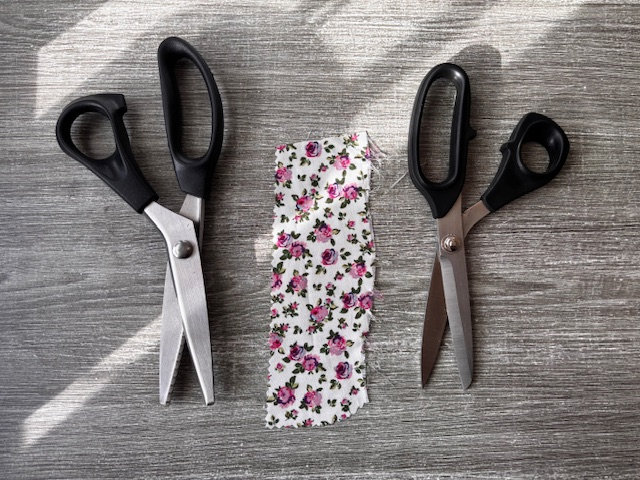
If you are sewing woven fabric, it is a good idea to invest in a pair of pinking shears. This is because they prevent the edges of the fabric from fraying so easily.
When you are working with woven fabric—measuring, pinning, sewing—it is easy to get those threads sticking out along the edges. They are not only annoying, but they also make the edge uneven.
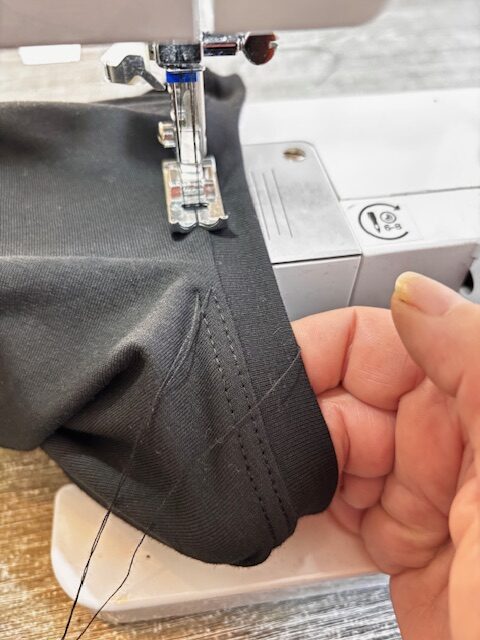
It can be a little tricky to sew with a twin needle and get the seam to hold. So here is my best tip.
A sewing machine is a bit like an oven; they all work slightly differently, so you need to test what works best on your specific machine.
But generally, a twin seam is sewn with long straight stitches and high thread tension. On my household machine, I sew with a stitch length of 4 out of 4 and thread tension of 8 out of 9. The thread tension may need to be adjusted occasionally depending on the fabric you are sewing.
Do not backstitch when you sew with a twin needle. Instead, leave at least 1 dm (approx. 4 inches) of thread at the beginning and end of each seam. Then tie a double knot on the threads that are in the same track on the right side and the threads that are on the wrong side. Then pull the threads from the right side to the wrong side using a hand sewing needle. Then tie all the threads together with a double knot and trim the threads.
We all need to unpick seams, whether we are beginners or experts.
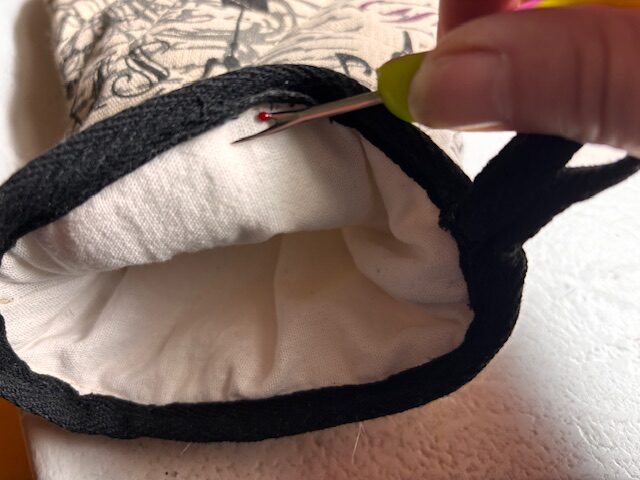
A tip when unpicking is to first unpick a few stitches with the long, sharp end [of the seam ripper], so you can get the short side of the ripper (the one that often has a small ball on the tip) in behind the seam. Keep the fabric taut and push the ripper forward.
It feels like you need 3 hands here, but if you hold the fabric, where you are going to start unpicking, between your middle finger and thumb and bend your index finger backwards so you can stretch the fabric, your other hand is free to unpick.
Personally, I prefer marking pens that disappear with heat. It is roughly like drawing with an ink pen, with the exception that the ink disappears when you iron over it.
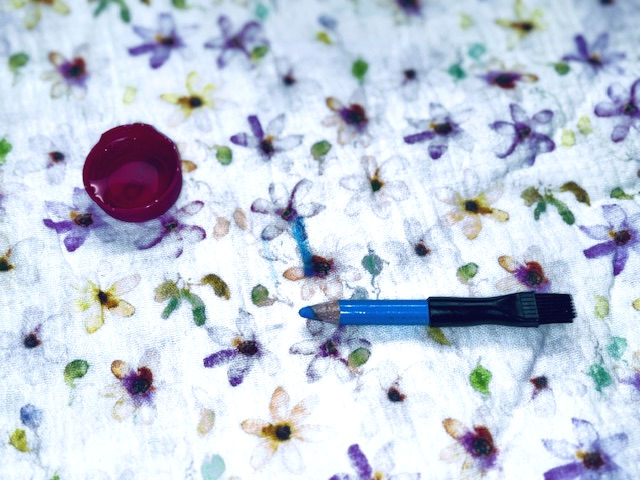
But if you prefer more traditional tailor's chalk pens, here is a useful tip for when you find it difficult to mark on the fabric. Dip the tip of the pen in water before marking. You can, for example, have a bottle cap with a little water that you dip the tip into at regular intervals.
2420250309
back2school
easter26
lucka1
lucka2
lucka3
lucka4
sommar25
symester25
syp210806
syp210903
syp230503
syp231001
syp241201
syp250101
syp250501
vårvinst25
Leave a Reply