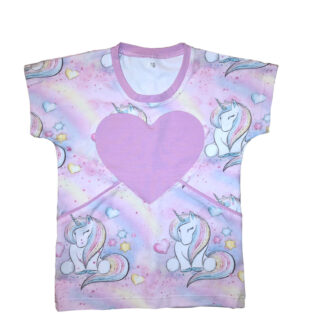
This guide details how to create 3D appliqués using textile materials.
The technique can be applied to most reasonably tightly woven textiles, suitable for clothing, accessories, and home textiles.
I have used the Halvtimmestop pattern for the description
Required materials include:
Textile of your choice - Perfect opportunity to reduce the scrap pile.
Wadding/Batting - I have used the wadding/batting from a broken/damaged pillow.
Fusable interfacing - Optional alternative.
You can click on the images in the description to make them larger.
92
92-170
Halvtimmestop
0 kr–59 krPrice range: 0 kr through 59 kr
Quick-sewn top with optional pockets
Select options
This product has multiple variants. The options may be chosen on the product page
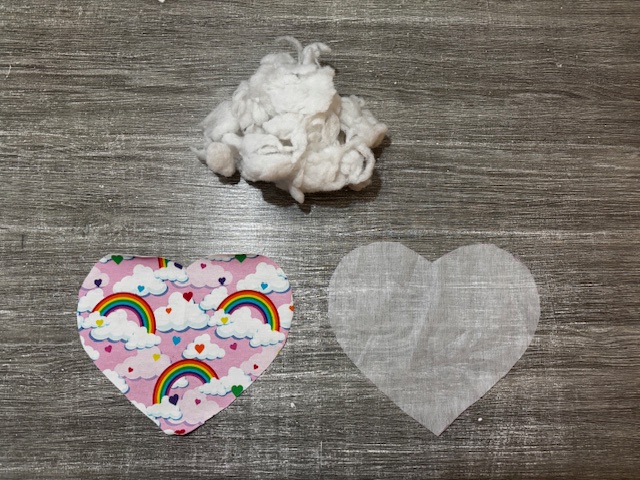
Here is the material I will use to make my appliqué.
For the fabric, I cut out my pattern without a seam allowance. For the interfacing, I cut it out with a 1 cm seam allowance.
It is not a must to use the interfacing, but the result and durability will be much better.
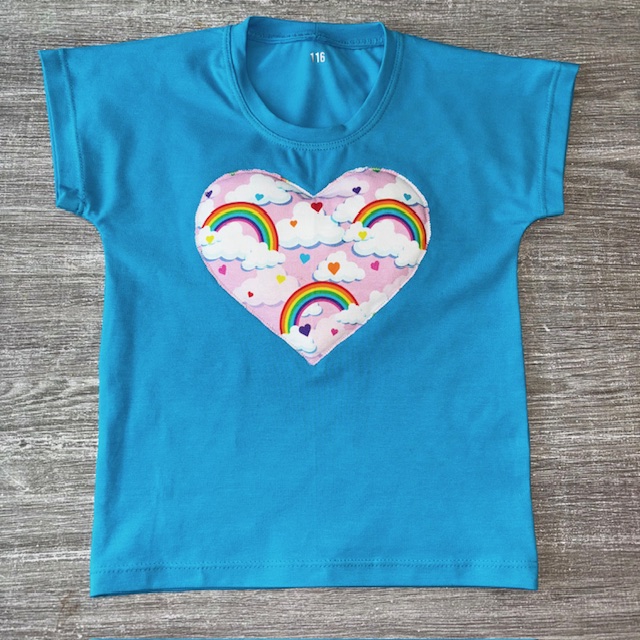
I have chosen to make the heart that is a pattern piece in the Halvtimmestop, but you can trace or freehand the figure you want.
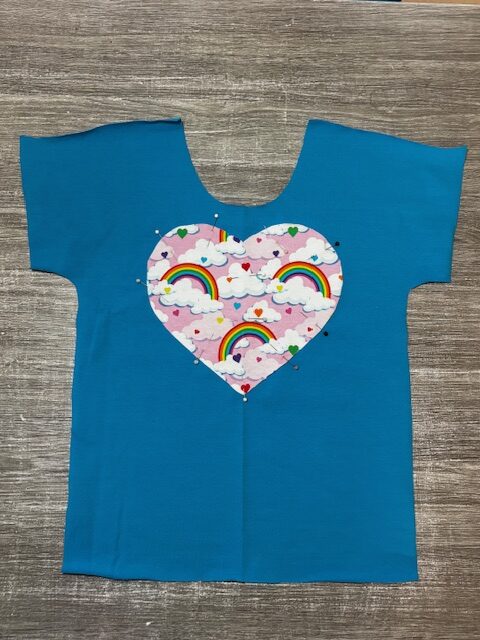
Start by pinning your appliqué firmly where you want it.
Sew a straight stitch around the entire appliqué, about 2 mm from the edge.
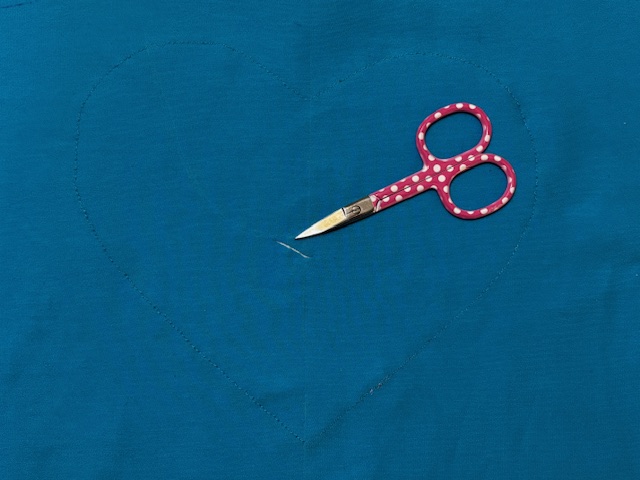
From the wrong side, cut a small slit/snip in the middle. Make sure you only cut into the bottom layer and not into the fabric of the appliqué.
In this description, I am cutting into the middle of the heart, and only into the blue fabric layer that makes up the front piece of the top.
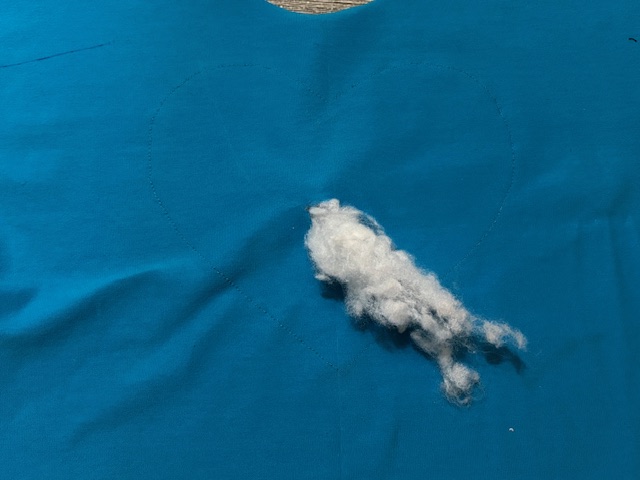
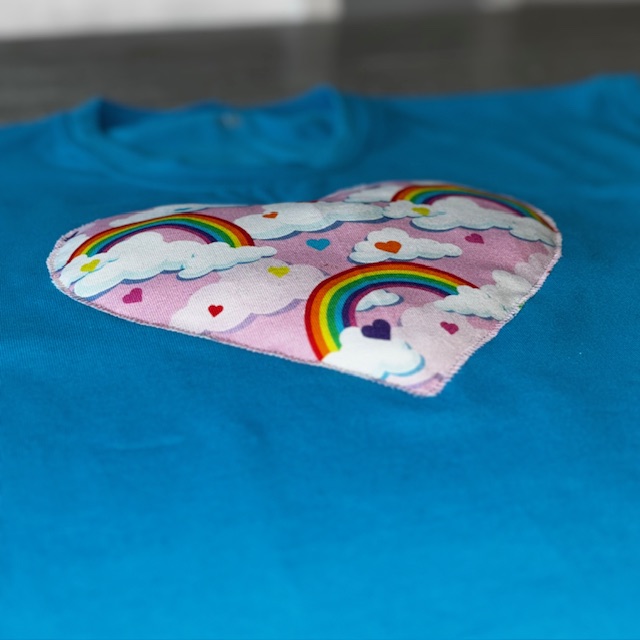
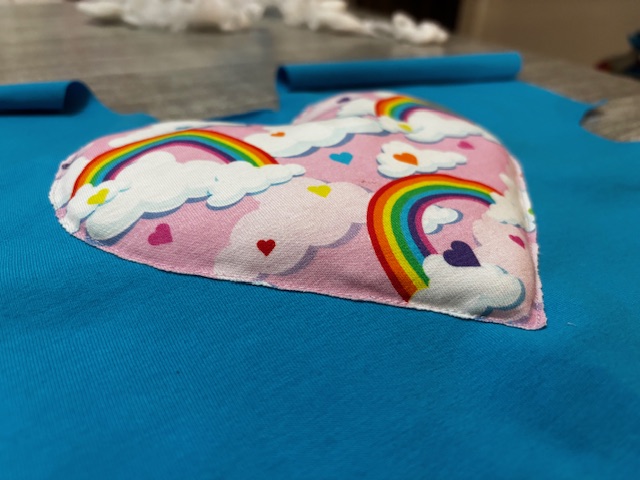
Stuff the wadding/batting through the hole. Use a pen or a stick to get the wadding into the corners and curves and to get it evenly distributed until you are satisfied with the amount of wadding.
Sew the hole closed with a needle and thread. I have used a ladder stitch (invisible stitch).
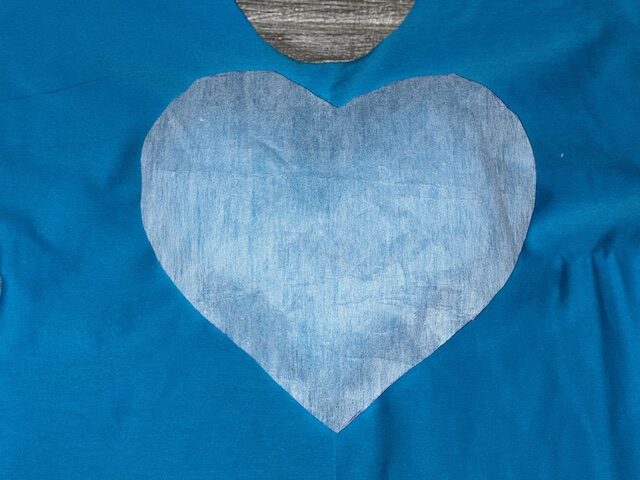
Place the interfacing on the wrong side so that the seam for the appliqué ends up inside the outer edges of the interfacing.
The bumpy/textured side of the interfacing is the side with glue, so that side should be against the fabric when you iron.
Iron it on with time and heat according to the instructions.
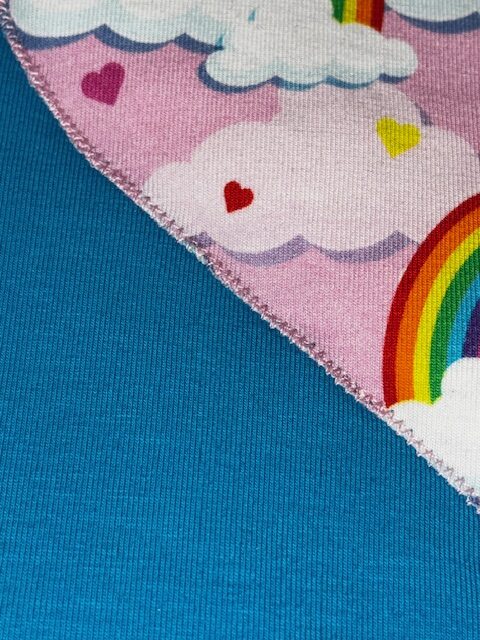
Sew a small zigzag stitch (dense and narrow stitches) over the edge of the appliqué. That is, over the straight stitch you previously sewed.
This step is also not absolutely necessary, but the durability will be better.
Now the appliqué is finished and it is time to sew the rest of the top together, in this case.
Leave a Reply